HOWARD Restor-A-Finish for Walnut Wood: A Practical Look at Scratch and Stain Repair for Finished Surfaces
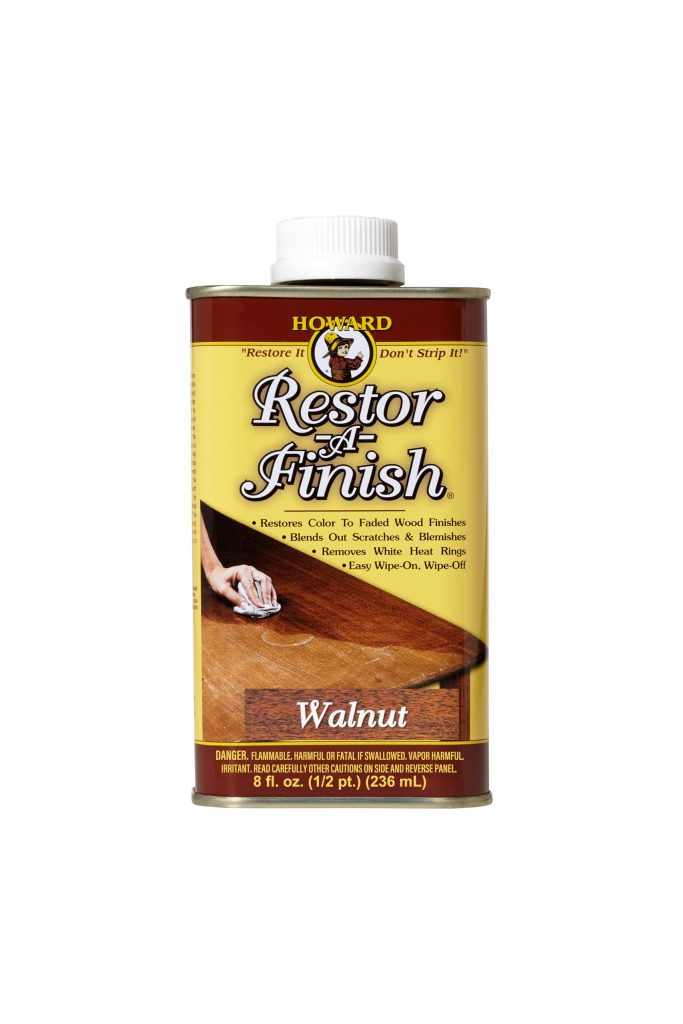
When furniture starts showing signs of wear—scratches, white rings from wet glasses, or heat marks from a hot mug—the instinct is often to strip and refinish. HOWARD Restor-A-Finish offers a less drastic alternative. This 8 fl oz bottle is designed to restore color and clarity to walnut and other finished woods without sanding or heavy labor. It is not a paint or a varnish, but a blend of solvents and stains that re-dissolves the existing finish and blends in minor damage.
To use it, you apply a small amount to a clean cloth and rub it into the affected area. The liquid penetrates the existing finish, re-liquefying it and allowing the color to even out. For scratches that have cut through the finish, it can help camouflage them by depositing pigment into the groove. White heat rings and water marks often disappear as the solvents re-moisturize the finish. It works best on surfaces that are already sealed with lacquer, shellac, or varnish—not on bare wood or waxed finishes.
One of the key functional features is its ability to blend colors. The walnut version contains a dark brown pigment that matches many walnut-toned finishes, but it is not a perfect match for every piece. The finish must be compatible; if the original coating is polyurethane or a modern catalyzed finish, the solvents may not react as effectively. Results depend heavily on the condition of the original finish. Deep gouges that expose raw wood will not be filled—this product is a tinted solvent, not a wood filler.
- Effective for surface-level scratches and rings—these often disappear with light rubbing.
- Does not require stripping or sanding, saving time and effort.
- Works on many finished wood surfaces, including furniture, trim, and cabinets.
- Leaves a slight residue that may need buffing to reduce shine.
- Strong solvent odor—ventilation is necessary during use.
A limitation worth noting is that the color can be unpredictable. On a walnut table with a reddish undertone, the brown pigment may look muddy. Test on an inconspicuous area first. Also, the product does not address worn edges or missing finish; it only restores color where the original coating remains intact. Over-application can create dark blotches that are hard to remove.
Compared to using a furniture touch-up marker or a wax stick, Restor-A-Finish covers larger areas more evenly. Touch-up markers are better for fine lines, while wax sticks fill deeper scratches but leave a soft surface. For overall dullness or widespread light damage, this product is more efficient. However, for a full refinishing job, a gel stain or polyurethane would be more durable.
This product is suitable for homeowners or DIYers looking to revive tired furniture without extensive work. It is ideal for vintage pieces with original lacquer finishes. It is not suitable for unfinished wood, floors, or surfaces that will be repainted. If you need a permanent repair on heavily damaged areas, consider a wood filler or professional refinishing instead.
Overall, HOWARD Restor-A-Finish is a practical tool for minor cosmetic fixes. It does not perform miracles, but for light scratches and rings, it often delivers acceptable results. Just manage expectations—this is a restorative solvent, not a complete refinishing solution.