The Crossover Grip Pencil Grips Review: A Functional Aid for Handwriting Comfort, But Not a Cure-All
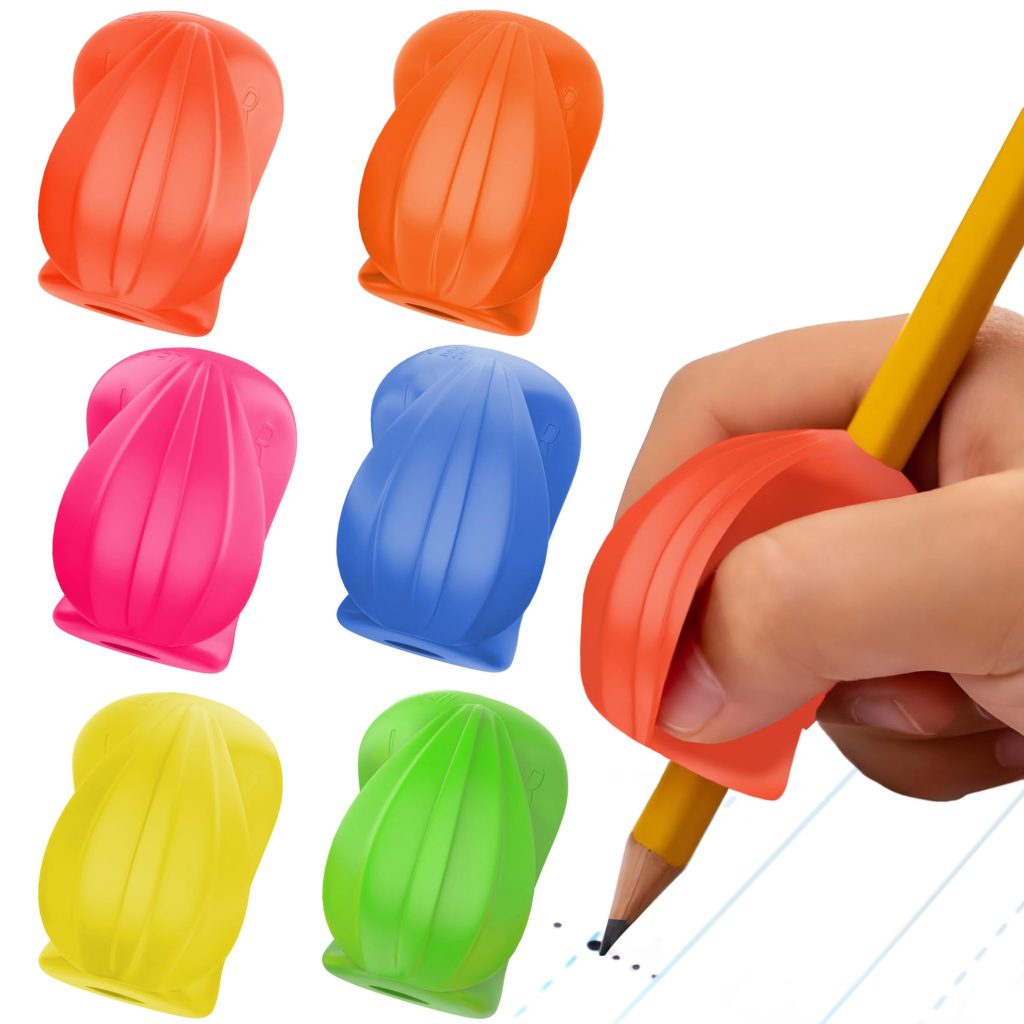
For anyone who has spent time teaching a child to write or struggling with hand fatigue during long writing sessions, pencil grips are a familiar tool. The Pencil Grip company’s Crossover Grip is one of the more common options on the market, and it aims to address both comfort and positioning for right-handed and left-handed users. After testing these neon-colored grippers on standard No. 2 pencils and a few thicker art pencils, I have some thoughts on where they help and where they fall short.
The Crossover Grip’s main claim is its ergonomic design, which features a contoured shape that guides the thumb and index finger into a stable tripod grasp. The grip has a distinct “wing” on one side that prevents the fingers from crossing over each other—a common issue for young writers who tend to wrap their thumb around the pencil. In practice, this wing does encourage a more open hand position, which can reduce strain during longer writing tasks. The material is a soft, flexible silicone that provides decent traction without being sticky, and the assorted neon colors make them easy to spot in a pencil case.
However, the grip is not a magic solution. It works best on standard-diameter pencils (around 8mm), but it can be stretched onto slightly thicker or thinner instruments with some effort. On jumbo pencils or pens, the fit is too tight to slide on easily, and on very slim mechanical pencils, the grip may wobble. The silicone does collect dust and lint over time, which is a minor nuisance but not a dealbreaker. One limitation worth noting is that the grip’s shape is quite specific; if a user does not naturally hold a pencil in the tripod position, the Crossover Grip can feel awkward and may require conscious effort to use correctly. It is not a passive fix for poor grip habits.
Compared to simpler pencil grips—like the standard round or triangular foam sleeves—the Crossover Grip offers more targeted finger placement guidance. The triangular grips are cheaper and easier to slide onto pencils, but they do little to prevent finger crossing. In contrast, the Crossover Grip’s wing design is more effective for that specific issue. That said, for users who already have a comfortable tripod grip, the extra bulk of the Crossover Grip may feel unnecessary and could even interfere with fine motor control. It is a trade-off between guidance and freedom of movement.
In real-world use, I found the grip helpful for a 7-year-old who tends to squeeze the pencil too tightly. The soft silicone reduced pressure on the fingers, and the wing kept the thumb from wrapping over the index finger. After about 20 minutes of writing, the child reported less hand fatigue than with a bare pencil. However, the grip did not instantly improve handwriting legibility—that still required practice and instruction. For an adult with arthritis or repetitive strain issues, the Crossover Grip may provide some relief, but it is not a substitute for proper ergonomic tools like a larger pen or a writing wedge.
Who is this product for? It is most suitable for children aged 4 to 10 who are learning the tripod grip and need a physical reminder to keep fingers in place. It can also help adults with mild hand discomfort during short writing tasks, as long as they are willing to adjust to the grip’s shape. It is not ideal for people who use very thin or very thick writing instruments, nor for those who prefer a minimalist feel. The neon colors are fun, but they may not appeal to older students or professionals who want a discreet look.
Overall, the Crossover Grip is a functional tool with a specific purpose. It does what it claims—encouraging a proper grip and reducing finger crossing—but it is not a universal solution for handwriting difficulties. The build quality is decent for the price, and the six-pack offers good value for classrooms or households with multiple users. Just keep expectations realistic: it is a training aid, not a shortcut to perfect handwriting.