Hit List Seed No Till Food Plot Mix for Deer: A Practical Look at This Throw-and-Grow Blend
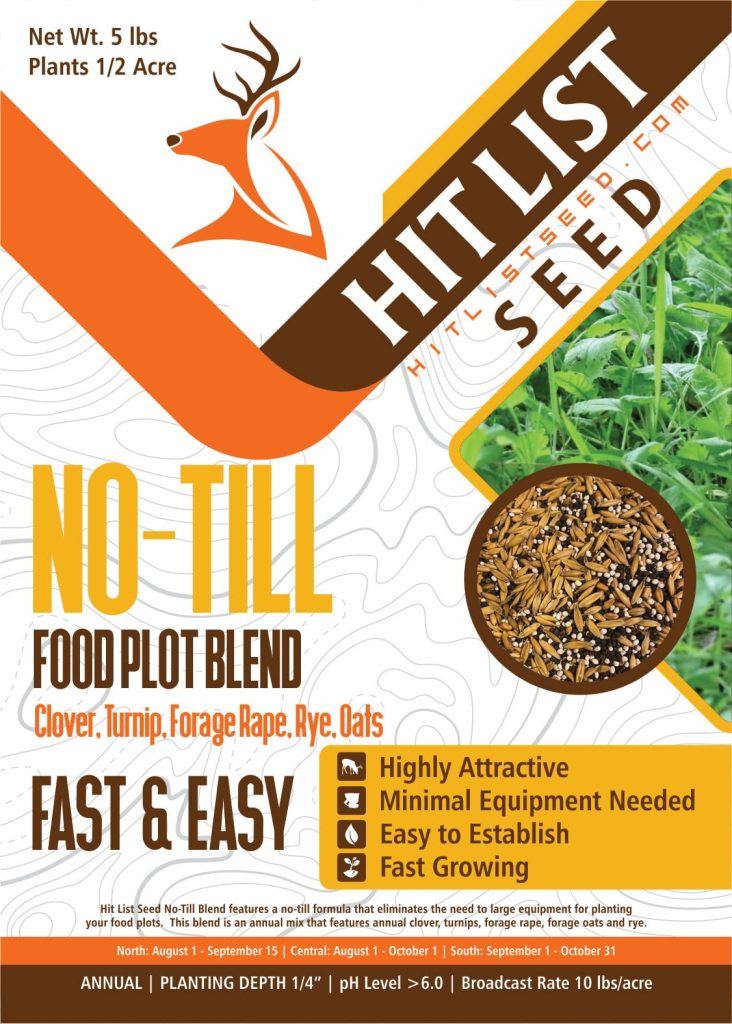
For hunters and land managers looking to establish a food plot without heavy equipment, the Hit List Seed No Till Food Plot Seeds for Deer [Annual Mix] offers a straightforward approach. Marketed as a “throw and grow” blend, this 5-pound bag combines clover, rye, turnip, brassica, and oats. I’ve spent time observing how this mix performs in real-world conditions—specifically on small plots and marginal soil where tilling isn’t practical. The idea is simple: scatter the seeds on bare ground, let rain and soil contact do the work, and hope for decent germination. In practice, results vary depending on site prep and timing.
The mix leans on fast-growing annuals like rye and oats to provide early forage, while turnips and brassicas offer later-season attraction. Clover adds a perennial element, though it’s worth noting that in an annual mix, clover may not persist as strongly without proper management. Key functional features include:
- No-till application: Designed for minimal soil disturbance, which can reduce erosion and save labor.
- Diverse species: Combines cereal grains, brassicas, and legumes for variety in palatability and growth timing.
- 5-pound coverage: Covers roughly 1,000 to 2,000 square feet, depending on seeding rate—suitable for smaller plots or test patches.
- Annual growth cycle: Meant to be replanted each year, though some clover may return.
In field use, the mix shows best results when broadcast onto lightly scratched or raked soil before a forecasted rain. Without any soil contact, germination drops noticeably. One limitation is that on hard-packed or weedy ground, the “throw and grow” concept works less reliably. The seeds need some soil exposure to establish, and competition from existing vegetation can choke out young seedlings. I’ve seen plots where only the rye and oats thrived, while turnips and brassica lagged—likely due to poor seed-to-soil contact or low fertility. Compared to a traditional tilled plot with a tested soil pH and fertilizer, this mix is less predictable. It’s a trade-off for convenience.
When compared to generic “deer mix” blends from feed stores, the Hit List mix offers a more targeted species selection, though it’s not radically different from many no-till annual blends on the market. The inclusion of clover is a plus for nitrogen fixation, but don’t expect a lush perennial stand—treat it as a bonus rather than a primary food source. For a similar approach, some users might consider a straight winter rye or oats plot at a lower cost, but you lose the diversity that attracts deer across seasons.
Who is this suitable for? It works for hunters with small plots (under half an acre) who want a quick, low-effort planting and are okay with moderate success rates. It’s also good for testing new ground without heavy investment. Who should avoid it? If you need a high-yield, long-season food plot for heavy deer pressure, or if your soil is compacted clay or dominated by aggressive weeds, you’ll likely be disappointed. The mix also isn’t ideal for large acreage food plots—cost per pound adds up, and broadcast seeding at scale is inefficient.
Realistic expectations: Expect some deer use within weeks if planted in spring or late summer, but don’t count on this being a standalone attractant for the entire hunting season. The brassicas and turnips mature later, providing a cold-weather food source, but palatability can drop after heavy frost. Over several trials, I’ve seen moderate browse pressure on the rye and oats early, with turnips getting hit later. Clover presence was spotty. The 5-pound bag is a convenient size for a single weekend project, but you’ll need multiple bags for any serious plot.
Overall, the Hit List Seed No Till mix is a functional product that delivers on its promise of convenience, but it’s not a magic solution. Success depends heavily on site conditions and timing. For the price, it’s a reasonable entry point into no-till food plotting, but experienced managers may prefer to customize their own blend for better reliability.