Taikemeti RL-HM006B Self-Powered Hour Meter: A No-Battery Option for Small Engines
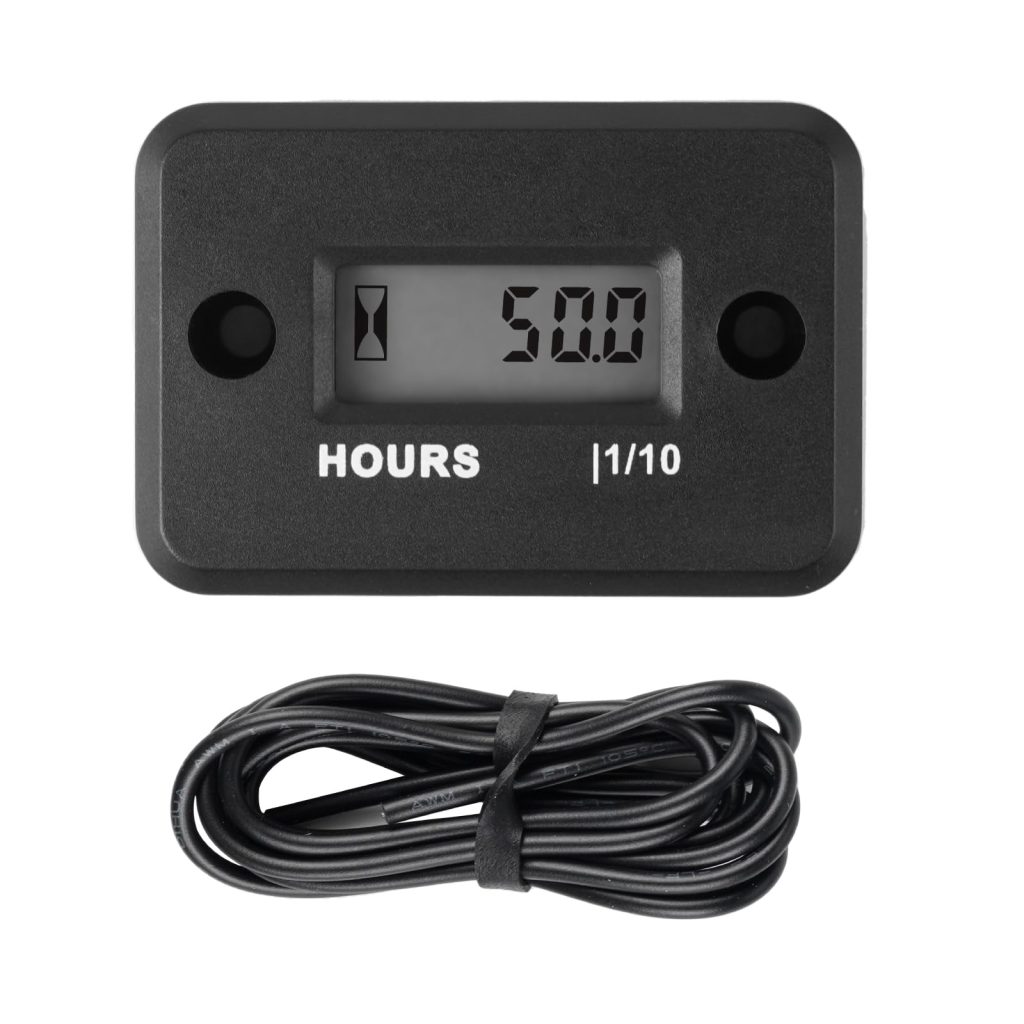
Small engine maintenance often feels like guesswork. When did I last change the oil on the generator? How many hours has that chainsaw actually run? The Taikemeti RL-HM006B digital hour meter aims to remove that guesswork without adding the hassle of replacing batteries. This is a self-powered unit that uses vibration from the engine to generate its own electricity, so once it’s attached, it just keeps counting.
Installation is straightforward. You attach the hour meter to a clean, flat metal surface on the engine—like the frame or a mounting bracket. A strong adhesive pad holds it in place, and a small sensor wire wraps around the spark plug wire to detect engine pulses. There is no permanent wiring or connection to the battery. This makes it a very clean add-on for equipment that might not have a dedicated electrical system, like a small generator or a push mower. The unit itself is housed in a black ABS plastic case that feels reasonably durable for outdoor use, though it is not completely indestructible if you drop a wrench on it.
Key functional features include a simple LCD display that shows total run time. The meter records hours and tenths of hours, up to 99,999.9 hours, which is more than enough for any consumer or light commercial machine. The display is powered by an internal capacitor that charges from the engine vibration. The readout is readable in most daylight conditions, but like many LCDs, it can be hard to see in direct sunlight or at extreme angles. There is no backlight, so checking hours at dusk or in a dark shed requires a flashlight. The unit is also rated as waterproof with an IP65 or similar rating, but the adhesive pad and sensor wire connection are potential weak points if exposed to high-pressure washing.
Real-world usage context is where this meter makes sense. On a lawnmower, chainsaw, or log splitter, you mount it once and forget about it. Every time the engine runs, the meter ticks away. It is ideal for tracking oil change intervals, air filter cleaning, or spark plug replacement. For a small generator used during power outages, it helps you log hours for maintenance. It also works on motorcycles and ATVs, though mounting on a vibrating engine block is more reliable than on a frame that might not transmit enough vibration to keep the capacitor charged.
However, there is a limitation or trade-off worth noting. The self-powered design means the meter only runs when the engine is vibrating. If you store the equipment for months, the internal capacitor discharges, and the display goes blank. The hour total is saved in non-volatile memory, so the number returns once the engine runs again. But you cannot check the hours without starting the engine first. This is a minor inconvenience compared to battery-powered meters that always show the reading, but it also means you never have to replace a dead battery. Another trade-off is that the adhesive mount is permanent once set. Removing the meter risks damaging the pad or the plastic case, so you cannot easily move it between machines.
Comparison to a similar product category is useful here. Battery-powered hour meters, like those from brands such as TinyTach or generic equivalents, offer a constant display and often include a backlight. They require a small coin cell battery that lasts a year or two. The Taikemeti unit eliminates battery replacement, which is a genuine advantage for equipment that sits unused for long periods. However, the battery-powered meters are often easier to read in low light and can be mounted in more locations since they don’t rely on vibration. For a chainsaw that gets used weekly, either option works fine. For a backup generator that runs once a year, the self-powered meter is actually better because the battery in a traditional meter might be dead by the time you need it.
Who it is and is not suitable for: This hour meter is well-suited for anyone who owns small gasoline-powered equipment and wants a simple, maintenance-free way to track run time. It is especially good for people who dislike replacing tiny batteries or who have multiple machines and want a set-and-forget solution. It is not ideal for professionals who need to check hours quickly in dim light without starting the engine. It is also not suitable for equipment that does not vibrate enough to charge the capacitor, such as some electric motors or very smooth-running generators. In those cases, a wired or battery-powered meter would be more reliable.
Overall, the Taikemeti RL-HM006B does exactly what it promises. It counts hours, requires no external power, and installs in minutes. The lack of a backlight and the need to run the engine to see the display are real compromises, but they are balanced by the convenience of never changing a battery. For the price, it is a practical tool for keeping small engines on a maintenance schedule.